Experience Is a Wonderful Teacher

Experience Is a Wonderful Teacher.

By Brian Wheeler, Director of Wealth Management & Business Brokerage 

The Problem Is That Life’s Biggest Financial Decisions Rarely Give Us the Opportunity to Practice First.

financial planning

The Reality of Once-in-a-Lifetime Moments

A colleague and I were talking this week about a friend who’s preparing to become more involved in her mother’s business. Her mother is in her eighties, still active in the company, and like many successful business owners, has spent a lifetime building something that’s much more than a source of income. It’s part of her identity.


Naturally, the conversation has begun to shift toward the future. At some point they’ll need to decide how ownership should transition, what roles each of them wants to play, and what the next chapter of the business should look like.


As we talked, one thought kept coming back to me: why would anyone expect themselves to know all of their options the first time they face one of life’s biggest financial decisions?


They’ve probably never been here before.


The more I thought about it, the more I realized this isn’t really a story about business succession. It’s a story about life. Most of us only retire once. We sell one business. We become an executor for the first time. We help aging parents navigate difficult financial decisions. We settle an estate. We transition a family business. These aren’t decisions we make every year. They’re once-in-a-lifetime moments.


Yet we often expect ourselves to know exactly what to do. Over the years, I’ve come to appreciate something that’s both simple and easy to overlook.


Experience is a wonderful teacher. The problem is that life’s biggest financial decisions rarely give us the opportunity to practice first.

Discovering the Questions We Need to Ask

That’s why I find it interesting when people hesitate to ask for another perspective because they think they should already know the answers. In reality, the greatest value often isn’t someone giving you the answer. It’s someone helping you discover questions you didn’t know needed to be asked. I’ve found that clarity doesn’t usually come from having all the answers. It comes from asking better questions before important decisions become permanent.


I’ve watched business owners learn there were succession strategies they never knew existed. I’ve seen families discover tax opportunities after decisions had already been made. I’ve watched people realize there were more flexible ways to transfer wealth, protect a business, or care for the next generation than they ever imagined.


None of those people made mistakes because they weren’t intelligent. They simply hadn’t been there before. The longer I’ve been doing this, the less surprised I am by what people don’t know. I’m much more surprised by how often they assume they’ve already seen all of their options.

The True Value of Experienced Advice

That’s one of the reasons I believe experienced advice has value. Not because someone else should make your decisions, but because they’ve helped many other families through similar moments. Experience doesn’t replace your goals or your values. It simply helps you make important decisions with a broader understanding of the possibilities in front of you.


Here’s something I’d encourage you to think about this week: is there an important financial decision on your horizon that you’ve never faced before?


Maybe it’s retirement. Maybe it’s selling a business. Maybe it’s helping aging parents.


Maybe it’s updating your estate plan or preparing the next generation to carry on something you’ve spent a lifetime building.


If this is the first time you’ve faced that decision, don’t let it also be the first time you’ve explored all of your options.


Ask questions. Seek perspective. Have conversations with people who’ve walked this road many times before.


One of the most rewarding moments in my profession is watching someone realize they have more options than they thought they did.


Sometimes that realization changes everything. And sometimes, it begins with a conversation they almost never had.

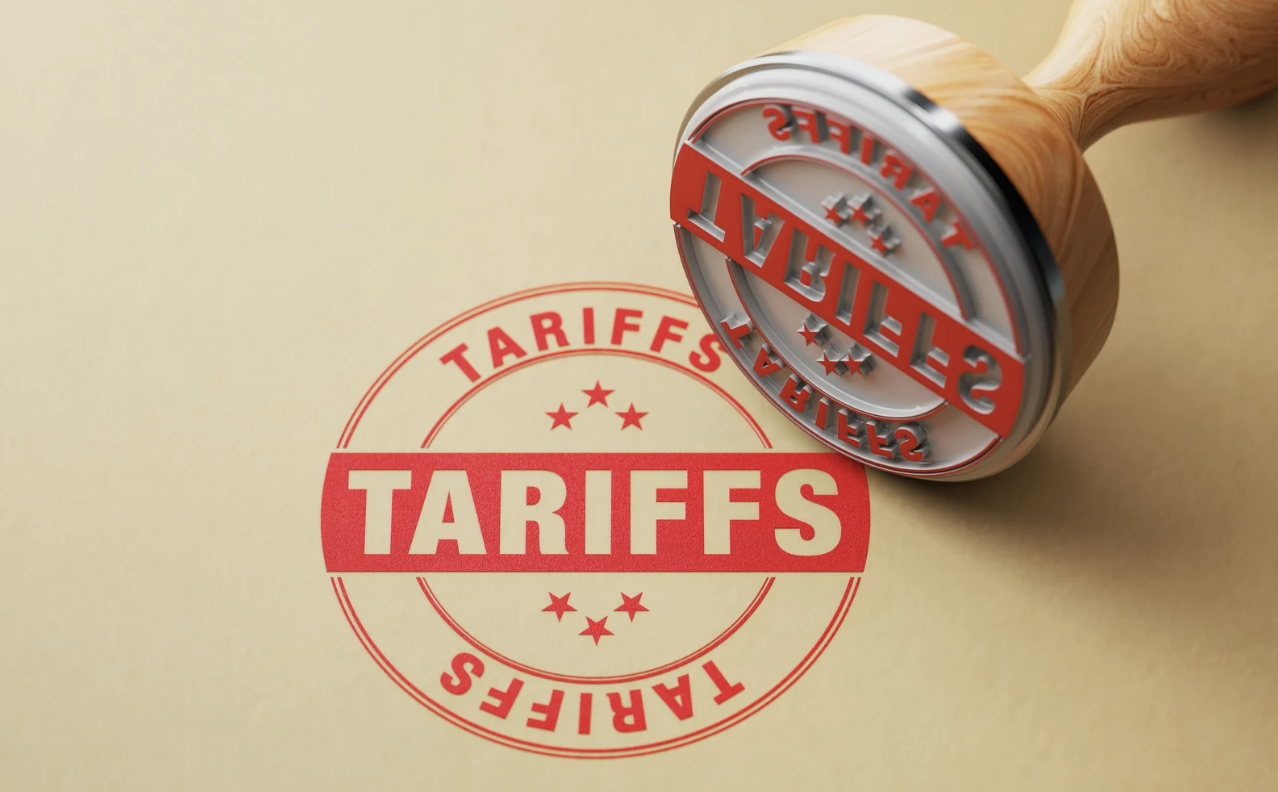
Tariffs Are Back in the Headlines. Should You Change Your Retirement Strategy?

Tariffs Are Back in the Headlines. Should You Change Your Retirement Strategy?

By Brian Wheeler, Director of Wealth Management & Business Brokerage 

It’s a question I’ve been hearing more lately. With tariffs back in the news, it’s only natural to wonder what they might mean for the economy—and more importantly, for your retirement savings.

Tariffs

Focus on the Plan; Not the Headline

Before making changes to your portfolio, though, I’d encourage you to ask yourself a different question: Am I reacting to my financial plan, or am I reacting to the headlines?


I’ve been doing this long enough to know that every few years there’s a new reason investors become convinced the markets are headed for trouble. We’ve been through recessions, the financial crisis, COVID, inflation, rising interest rates, bank failures, political uncertainty, and now another round of tariff concerns. Every one of those events felt significant while we were living through it, and to be fair, many of them did create short-term market volatility.


But here’s what I’ve also learned: the headlines usually change much faster than a well-built financial plan should. 


That’s because successful retirement planning has never depended on predicting the next headline. It’s built around creating a strategy that can navigate whatever comes next.


Can tariffs create uncertainty? Absolutely. Could they affect certain industries or companies? Certainly. Does that automatically mean your retirement strategy needs to change? Not necessarily.


Over time, businesses adapt, supply chains adjust, consumers change their buying habits, and markets absorb new information. What often causes the greatest damage isn’t the headline itself—it’s when investors abandon a solid long-term strategy because the latest news makes them uncomfortable. 


If your portfolio was built around your goals, your risk tolerance, your income needs, and your timeline—not this week’s news cycle—there may be very little that actually needs to change today.


That doesn’t mean ignoring what’s happening in the world. Stay informed. Ask questions. Review your plan. Just don’t confuse doing something with making progress. Some of the most expensive investment decisions I’ve seen over the years came from investors who felt they had to act simply because the news made them nervous.


If these recent headlines have you wondering whether your strategy still makes sense, that’s a worthwhile conversation to have. Not because of tariffs alone, but because it’s healthy from time to time to step back and make sure your financial plan still reflects where you are today and where you’re trying to go.


The headlines will keep changing. They always do. Your retirement goals probably haven’t—and that’s where your attention belongs.

Could One Overlooked Planning Mistake Erase Years of Investment Gains?

Could One Overlooked Planning Mistake Erase Years of Investment Gains?

By Brian Wheeler, Director of Wealth Management & Business Brokerage 

Can I ask you a question?


If your investment portfolio earned an extra 1% this year, would that have a bigger impact on your family’s future than avoiding a major tax mistake? Or preventing an unnecessary lawsuit? Or making sure your estate plan works the way you intended? Or protecting a business you’ve spent decades building?


Most people answer that question pretty quickly.

asset protection

Why protection matters as much as growth

Don’t get me wrong. Investments matter, and they always will. We spend a great deal of time helping clients build portfolios designed to help them reach their goals. But after many years of working with successful families and business owners, I’ve come to believe that much of our greatest value isn’t found in managing investments. It’s found in the planning and protection that surrounds them.


Most people don’t build wealth just to have a bigger account balance. They build it to create choices, take care of their family, retire with confidence, support causes they care about, or leave something meaningful behind.

The money isn't the goal. What the money makes possible is the goal.

Over the years, I’ve seen great portfolios paired with outdated estate plans, businesses that outgrew their succession plans, insurance that no longer matched the risks, and tax strategies that were never updated. Not because anyone made a bad decision, but because life kept moving. Families changed, businesses grew, laws changed, and the planning simply never kept pace.


These risks rarely make the headlines. They don’t show up on your investment statement or trigger an alert on your phone. They simply grow quietly until something unexpected brings them to light.


That’s why one of the first questions we ask clients has very little to do with the stock market: What are you actually trying to protect?


The answer is different for everyone. It might be your family, your business, or simply preserving what you’ve worked so hard to build.


As a financial advisor who also manages investments, I’ve always believed our greatest value often comes from helping clients protect what they’ve built—not simply helping them build more. Investment management is an important part of that responsibility, but it’s only part of the story. The planning around those investments is often where the greatest value is created.


I’ve never had a client tell me their biggest goal was simply to outperform the market. They want confidence. They want clarity. They want to know that everything they’ve worked so hard to build is positioned to accomplish what they intended.


I believe that’s where the greatest value is created.

Everything Is Fine. That’s What Worries Me

Everything Is Fine. That's What Worries Me

By Brian Wheeler, Director of Wealth Management & Business Brokerage 

One of the most dangerous phrases I hear from successful people is, “We’ll get to that later.”


The interesting thing is that they’re usually right. Most of the time, the estate plan can wait. The beneficiaries can wait. The succession plan can wait. The insurance review can wait. The conversation with the kids can wait. Life goes on, business continues to grow, retirement gets a little closer, and nothing bad happens because those things were delayed for another month or another year. That’s what makes it so easy to believe there will always be more time.

The Hidden Risk of Smooth Sailing

The Hidden Risk of Smooth Sailing

That’s why one of the things that worries me most is when everything appears to be fine.


Not when the market is down. Not when the economy is struggling. Not when a business is facing challenges. Those situations tend to get people’s attention. They create urgency and force decisions.


What worries me is success.


Business is growing, investment accounts are doing well, retirement feels comfortably down the road, the family is healthy, and life is moving along pretty much as expected. That’s usually when people become comfortable assuming there will always be more time.

When "Later" Finally Arrives

Over the years, I’ve sat across the table from families dealing with the loss of a spouse who handled everything. I’ve seen business owners receive unexpected offers and realize they weren’t prepared to answer basic questions about value, taxes, or what life would look like after a sale.


Recently, I was working with a client whose mother is living in a long-term care facility. There wasn’t a single event that brought them to this point. It was the result of gradual changes over time. As we talked, it became clear that the challenge wasn’t just the emotional difficulty of watching a parent decline. It was also trying to answer questions and make decisions that would have been much easier years earlier.


As I listened to their experience, I was reminded that most planning opportunities don’t disappear because people make bad decisions. They disappear because life changes before people get around to addressing them.


In almost every case, the issue wasn’t a lack of intelligence. It wasn’t a lack of resources. It wasn’t even a lack of planning. The issue was the assumption that there would be more time.


More time for what? More time to get organized? More time to have the conversation? More time to simplify? More time to make the decision you’ve known you should make?


Let me ask you something. If something happened to you tomorrow, would your spouse know exactly where everything is? Not generally. Exactly. Would they know where accounts are held, how assets are titled, what insurance exists, where income comes from, who your trusted advisors are, and what decisions would need to be made? Would your children?


Most people answer those questions with some version of “probably.” But probably is not the same as knowing.

Success Creates Complexity

One of the realities of success is that life becomes more complicated, not less. More accounts. More assets. More opportunities. More decisions. Over time, complexity accumulates quietly in the background while everything appears to be working. That’s what makes it dangerous.


The absence of a problem today can create the illusion that there isn’t one.

The Best Time Is Before You Need It

One of the lessons business owners teach us is that the best time to prepare for a transition is before one is necessary.


The best time to sell a business is often when you don’t need to. Buyers pay for strength, growth, and opportunity. Waiting until circumstances force a decision usually means fewer options, less flexibility, and less control.


The same principle applies throughout life. The best time to review an estate plan is before there is an estate issue. The best time to discuss long-term care is before anyone needs care. The best time to create a succession plan is before someone decides to leave. The best time to organize your finances is before your family needs to step in and help.

Preparation Over Prediction

I’ve never believed that successful planning is about predicting the future. None of us know what markets will do, where interest rates are headed, what Congress will change, or what surprises life has waiting around the corner. What we can do is prepare while we still have options.


Because the families who navigate change most successfully are rarely the ones who predicted it. They’re the ones who prepared before it arrived.


So I’ll leave you with one final question: what if the biggest risk to your financial future isn’t the market, taxes, inflation, or the economy? What if it’s assuming you’ll have more time to prepare before life reminds you that time was never guaranteed?

The Planning Was There. The Confidence Wasn’t

The Planning Was There. The Confidence Wasn't

By Brian Wheeler, Director of Wealth Management & Business Brokerage 

I recently spent time with a family that had done many things right. They had built substantial wealth, surrounded themselves with capable advisors, implemented planning strategies over the years, and made thoughtful decisions along the way. From the outside, it looked exactly like what success is supposed to look like.

understanding how it all connects

When Complexity Clouds Confidence

What surprised me was that their biggest concern wasn’t about the markets, taxes, estate taxes, or even investment performance. They simply weren’t sure how all the pieces fit together anymore.


As we talked, it became clear that they weren’t looking for another strategy, another product, or another opinion.


They wanted confidence.


Not because they believed something was broken, or because they distrusted their advisors. In fact, quite the opposite. They trusted the people around them and believed good decisions had been made over the years. What they struggled with was uncertainty.


They had spent a lifetime building wealth, yet they couldn’t explain how everything worked together. They weren’t sure whether all the moving pieces were still aligned with their goals, whether changes over the years had created unintended consequences, or whether their family would ultimately benefit from everything they had worked so hard to build.


The more we talked, the more I realized this may be one of the most overlooked challenges successful families face.


The reality is that success tends to create layers. Over the years, opportunities arise, strategies are implemented, advisors become involved, and decisions made at different points in life begin interacting with one another in ways that weren’t always anticipated. What started out as a fairly straightforward financial picture can gradually evolve into something much more complex, leaving many successful people wondering whether all the pieces are still working together the way they think they are.


The interesting part is that nothing appeared to be broken. That’s what made me stop and think. How many successful people are carrying around a level of uncertainty they rarely talk about?


Not because they’ve made poor decisions, but because life has changed, success has happened, and nobody has stepped back to help them see the entire picture.


At some point, success stops creating certainty and starts creating complexity, and complexity has a way of creating doubt.


If someone asked you to explain how all the important pieces of your financial life fit together today, could you? More importantly, could your spouse? Could your children?


If the answer isn’t an immediate yes, it may be worth asking why.


Because some of the most expensive mistakes I’ve seen weren’t caused by bad investments or poor decisions. They happened because people assumed everything was aligned, coordinated, and working together as intended.


The wealth was there. The planning was there. The confidence wasn’t. And when significant wealth, family, and legacy are involved, what is that confidence worth?

Your Advisor May Be Using an Outdated Investment Playbook

Your Advisor May Be Using an Outdated Investment Playbook

By Brian Wheeler, Director of Wealth Management & Business Brokerage 

The Investment World Is Changing…but you may not be hearing about it!
Technology + Finance Innovation
One of the biggest topics at the recent Envestnet Elevate conference was the rapid evolution of tax-aware investing through Direct Indexing, tax overlay strategies, and customized SMA (Separately Managed Account) portfolio management designed to improve after-tax outcomes for investors.
 
A few years ago, these types of strategies were typically reserved for ultra-high-net-worth investors with very large portfolios. Today, technology has changed that dramatically.
 
What was once only available to the wealthiest investors is now becoming accessible to many successful families, professionals, and business owners with much more reasonable account minimums.
 
Why does this matter? Because traditional investing often ignores one of the biggest drags on long-term wealth creation…Taxes.
 
For years, many investors were placed into standard mutual funds, ETF models, or managed portfolios that focused almost entirely on performance before taxes, while giving very little attention to what investors actually kept after taxes.
 
That’s a problem…especially for high-income earners, business owners, or retirees with sizable taxable investment accounts.
 
Direct indexing strategies allow investors to own the underlying individual stocks within an index rather than simply buying a single index fund. That creates opportunities to:
 
  • harvest tax losses throughout the year
  • offset gains elsewhere
  • potentially reduce taxable income
  • potentially build tax-loss carryforwards that may help offset future capital gains from the sale of investments, businesses, or even real estate interests
  • create greater flexibility around future liquidity and diversification decisions. 
In simple terms…the goal is not just to generate returns. The goal is to improve what you actually keep. That’s a very different conversation, and honestly, this is where the investment industry is beginning to separate into two groups:
 
  • advisors embracing technology, personalization, and tax-aware planning.
  • advisors still running largely standardized portfolio models because “that’s how it’s always been done”
To be fair, traditional diversification and low-cost investing still matter. That is true! But many investors are now discovering that modern portfolio management is becoming far more customized and tax-aware than what they’ve experienced in the past.
 
This was reinforced recently in a Wall Street Journal article titled “Stock Gains Without All the Taxes? How the Hottest Trade on Wall Street Works” discussing the growing attention around tax-efficient investing strategies and how technology is changing portfolio management for everyday investors…not just the ultra-wealthy.
 
The reality is that taxes, investment location, withdrawal sequencing, and portfolio structure can sometimes have just as much impact on long-term outcomes as investment selection itself.
 
In some cases, investors who consistently harvest losses over time may accumulate meaningful tax-loss carryovers that can potentially be used strategically in future years. That can become particularly valuable for investors who may eventually sell concentrated stock positions, investment properties, a business, or other highly appreciated assets.
 
While no strategy eliminates taxes altogether, having accumulated losses available in the right situations can create planning flexibility that many traditional portfolio approaches simply never address.
 
Yet many investors rarely hear these conversations from their advisors. That should probably raise a question. If your advisor has never discussed tax-aware investing, direct indexing, tax overlay strategies, or ways to improve after-tax efficiency inside taxable accounts…you may want to ask why.
 
Not every investor is a fit for these strategies. But many investors are.
 
For certain investors, especially those with large taxable accounts, concentrated positions, executive compensation stock, real estate holdings, or future business sale considerations, these conversations can become extremely important.
 
And in today’s environment, continuing to ignore tax efficiency altogether may be leaving real money on the table over time.
 
At Keystone Wealth Advisors, we believe investment management should evolve alongside technology, tax law, and investor needs…not stay stuck in outdated portfolio models simply because they’re familiar.
 
Because good investing is not just about what you make….it’s also about what you keep.

PPI Came In Hotter Than Expected…And It Matters More Than Most People Realize

PPI Came In Hotter Than Expected…And It Matters More Than Most People Realize

By Brian Wheeler, Director of Wealth Management & Business Brokerage 

This week’s Producer Price Index (PPI) report came in hotter than expected, showing wholesale inflation continuing to push higher.
inflation

Most people hear “inflation report” and think, “Oh great…things are getting more expensive again.”


That’s true. But the bigger issue is what inflation quietly does underneath the surface over time.


PPI tracks rising costs at the business and producer level before those costs fully reach consumers. In simple terms, businesses are paying more for labor, fuel, shipping, materials, insurance, and services…and eventually those costs work their way through the economy.


That matters because inflation doesn’t just impact groceries and gas prices. It impacts retirement projections, investment decisions, taxes, business margins, borrowing costs, and future income needs.

And honestly, this is where we think a lot of people are getting caught off guard right now.


On paper, many successful people look financially secure. Strong income. Healthy balance sheets. Growing investment accounts. Valuable businesses. But once we start stress-testing the plan, the cracks sometimes begin to show.


We are seeing too much cash sitting idle while inflation quietly erodes purchasing power. Stock positions that became overly concentrated simply because they performed well. Retirement projections built around outdated assumptions. Multiple advisors all working independently with nobody truly coordinating the bigger picture.
 

Most people don’t notice these things during strong markets. That’s the danger.


A good environment can make almost any financial situation feel organized for a period of time. Inflation and uncertainty tend to expose whether the plan underneath it was actually built properly to begin with.


That’s why this conversation matters right now. Not because people should panic. Not because the economy is collapsing. But because periods like this tend to separate real planning from simple accumulation.


There’s a big difference between building wealth and organizing wealth.


At Keystone Wealth Advisors, we believe good planning starts by asking harder questions. Is your cash actually positioned properly? Are unnecessary taxes quietly draining wealth?


Is too much of your future tied to one stock or one business? Will your retirement assumptions still hold up 10 years from now? Do all the moving parts of your financial life actually work together?


Those conversations create clarity. And clarity tends to create better decisions.
 
If recent headlines have caused you to pause and wonder whether your current financial plan is truly organized for what’s ahead, now may be a very good time for a second set of eyes.

Take Care of the People That Take Care of You!

Take Care of the People That Take Care of You!

By Brian Wheeler, Principal, Keystone Wealth Advisors 

One thing I have noticed over the years is that the true “value” of a company comes down to a handful of key people.

team leader

The True Value of a Company

The individuals who keep operations running smoothly, maintain important client relationships, are the keepers of the Company’s “Institutional Knowledge” and help the business grow year after year.


The operations leader keeps everything running smoothly.


The salesperson who maintains important client relationships.


The manager who keeps the team moving in the right direction.

The Impact of Losing Key People

Over the years, I have seen situations where the departure of just one of these individuals created a ripple effect that impacted growth, operations, and sometimes even the perceived value of the business.


One of the questions I sometimes ask business owners is simple, “If one of your key people decided to leave tomorrow, how difficult would it be to replace them?”


The answer often opens the door to some very good planning conversations.

Incentivizing and Retaining Key Employees

Many of the business owners we work with choose to create additional incentives for the key people who help build the business.


These might include things like:


  • Deferred compensation plans
  • Phantom equity or stock appreciation arrangements
  • Executive bonus strategies
  • Supplemental retirement benefits

A Strategic Approach: Non-Qualified Deferred Compensation

One approach that can work particularly well is non-qualified deferred compensation.


These arrangements allow business owners to reward loyalty and long-term contribution while aligning key employees with the future success of the company—often without giving up ownership in the business.

Why Leadership Stability Matters to Buyers

Interestingly, when we work with business owners who are preparing for an eventual transition or sale of their company, one of the most important factors buyers often look at is the strength and stability of the leadership team that will remain after the owner steps away.

Protecting the Value You’ve Built

Taking care of the people who help build your business is not just good leadership.


In many cases, it is also one of the smartest ways to protect the value you have worked so hard to create.


If you would like to explore some of the strategies available for aligning and rewarding key people in your organization, I would be happy to share a few ideas.

The $200,000 Retirement Contribution Most Business Owners Don’t Know Exists

The $200,000 Retirement Contribution Most Business Owners Don’t Know Exists

By Brian Wheeler, Principal, Keystone Wealth Advisors 

Many business owners assume their retirement plan is already doing everything it can.


After all, they’re contributing to their 401(k), their employees have a plan available, and their payroll provider handles the administration. Everything seems to be working.

Retirement savings

But Here's the Surprising Reality:

Many successful business owners are leaving six-figure tax deductions on the table every year.


Not because they’re doing anything wrong — but because their retirement plan was designed for simplicity, not optimization.

The Hidden Opportunity

Most retirement plans set up through payroll providers are prototype 401(k) plans. These plans are convenient and easy to administer, but they are typically designed to serve the broadest possible group of employers.


That means they often don’t take full advantage of the flexibility available under the tax code.


For business owners with strong income and stable cash flow, there may be an opportunity to significantly increase retirement contributions through a more customized plan design.

When a Retirement Plan Becomes a Strategic Tool

In the right situation, combining a 401(k) plan with a Defined Benefit plan can dramatically increase the amount a business owner is able to contribute each year.


Depending on factors such as age, income, and employee demographics, total contributions can sometimes reach: $150,000 – $300,000+ annually. 


These contributions are typically:


  • Tax deductible to the business
  • Compounding tax-deferred for retirement
  • Building wealth outside the business

For owners in their peak earning years, this strategy can become one of the most powerful ways to reduce taxes while accelerating retirement savings. 

Why Plan Design Matters

Retirement plans are not one-size-fits-all.


The amount a business owner can contribute depends heavily on how the plan is structured. Key factors include:


  • Owner age and income
  • Number and age of employees
  • Compensation structure
  • Business profitability
  • Long-term retirement goals

A properly designed plan can allow owners to maximize their own contributions while still providing meaningful benefits to employees and remaining fully compliant.

The Limits of “Off-the-Shelf” Plans

Payroll providers often offer retirement plans as a convenient add-on to payroll services.


While these plans are easy to implement, they are typically built using standardized designs that may not incorporate strategies such as:


  • Age-weighted allocations
  • Cross-tested profit sharing
  • Cash balance or defined benefit integrations
  • Advanced plan design techniques

For high-income business owners, these limitations can translate into missed opportunities for significant tax savings.

Beyond the Business

For many entrepreneurs, the business itself becomes their largest asset.


But relying on the eventual sale of the business alone can create risk.


A well-structured retirement plan allows owners to systematically move wealth out of the business and into personal assets while benefiting from meaningful tax deductions along the way.

A Question Worth Asking

If your business is having a strong year, it may be worth asking:


Is my retirement plan designed for convenience… or designed to maximize opportunity?


The difference can be substantial.

Better Together

At Keystone, our teams work together across tax, wealth advisory, and business consulting to help business owners design retirement strategies that align with both their business success and their long-term financial goals.


If you’d like to explore whether your retirement plan could be working harder for you, we would be happy to start that conversation.

How Do Markets React to Global Conflicts?

How Do Markets React to Global Conflicts?

By Brian Wheeler, Principal, Keystone Wealth Advisors 

What History Shows May Surprise You. 


When global tensions rise, many investors begin asking the same question:


“What does this mean for the markets?”

Global stock market

A Concerning Ripple Effect

For many business owners and investors, these moments can create uncertainty not only about their portfolios, but also about the broader economy and the businesses they’ve worked hard to build.


News coverage can make the situation feel urgent and unpredictable. Headlines focus on uncertainty, potential economic disruption, and the ripple effects across global trade and energy markets.


It’s natural to wonder whether events like these should change how you think about your investments.

The Initial Market Reaction: Uncertainty

When a major geopolitical event occurs, markets typically respond with short-term volatility.


Investors dislike uncertainty, and global conflicts create plenty of it. Questions arise about economic stability, supply chains, energy prices, and how governments and central banks might respond.


Because of this, markets often experience an initial pullback or spike in volatility as investors digest new information.


But that initial reaction is usually only the first chapter of the story.

What History Shows

Over the past century, markets have navigated numerous wars and geopolitical crises. While each event has its own circumstances, a consistent pattern tends to emerge:


  1. Markets often react quickly at the onset of conflict.
  2. As more information becomes available, markets begin to stabilize.
  3. Long-term performance is ultimately driven by economic growth, innovation, and corporate earnings, not the conflict itself.

In many cases, markets begin recovering well before conflicts are resolved, as investors shift their focus back to long-term fundamentals.

A Look at History

While past performance never guarantees future results, history can provide helpful perspective: 


Conflict / Event — Market Reaction — Longer-Term Outcome.


  • World War II (1941) — Markets initially fell after Pearl Harbor — U.S. markets recovered within months and rose significantly during the war years
  • Korean War (1950) — Short-term decline as uncertainty increased — Markets stabilized and resumed long-term growth
  • Vietnam War (1960s–1970s) — Volatility and inflation concerns — Long-term growth continued through economic expansion
  • Gulf War (1990–1991) — Markets declined leading up to the invasion — Rapid recovery once military action began
  • September 11, 2001 — Sharp but brief decline after markets reopened — Markets recovered within months
  • Russia–Ukraine Conflict (2022) — Initial volatility across global markets — Markets stabilized as investors refocused on fundamentals

While the events themselves were significant and often tragic, the broader lesson is that financial markets have historically been resilient over time. 

Why Long‑Term Investors Stay Disciplined

Major geopolitical events can feel unprecedented in the moment, but history reminds us that markets have navigated:
 
  • wars
  • recessions
  • political shifts
  • inflation cycles
  • global crises

And yet over time, markets have continued to grow alongside the global economy.


This doesn’t mean volatility disappears. It simply means that long‑term investment success is usually driven by discipline, diversification, and patience — not by reacting to headlines.

The Value of Perspective

Periods of global tension remind us that investing is not just about numbers and charts. It’s also about maintaining perspective during uncertain times.
 

A well‑constructed financial plan is designed to account for volatility, uncertainty, and the unexpected events that inevitably occur over time.


While the world can feel unpredictable in the short run, long‑term investors who remain focused on their goals often find that staying the course is the most productive strategy.


For business owners in particular, moments like these often highlight the importance of coordinating investment strategy, tax planning, and long‑term business goals within a single, thoughtful financial plan.

Why Guidance Matters During Uncertain Times

Moments of global uncertainty often remind investors why having a thoughtful plan — and someone to help interpret the noise — can be so valuable.
 

Markets will always experience periods of volatility, whether driven by economic cycles, political developments, or global events. What matters most is having a strategy designed around long‑term goals, diversification, and risk tolerance, rather than reacting to each new headline.


During times like these, one of the most valuable roles an advisor can play is helping clients separate signal from noise, remain focused on their long‑term objectives, and make thoughtful decisions that align with their broader financial plan.


If you have questions about how current events may impact your financial plan or investment strategy, we are always happy to talk.


Sometimes the most valuable thing an advisor can provide during uncertain times is clarity and perspective.