Why Growing Manufacturers Always Feel Broke
Ted Pakes, CPA & CFO
A manufacturing company can post strong sales, solid margins, and respectable EBITDA — and still feel chronically short on cash.
That disconnect is not unusual. In fact, it is one of the defining financial characteristics of the industry.
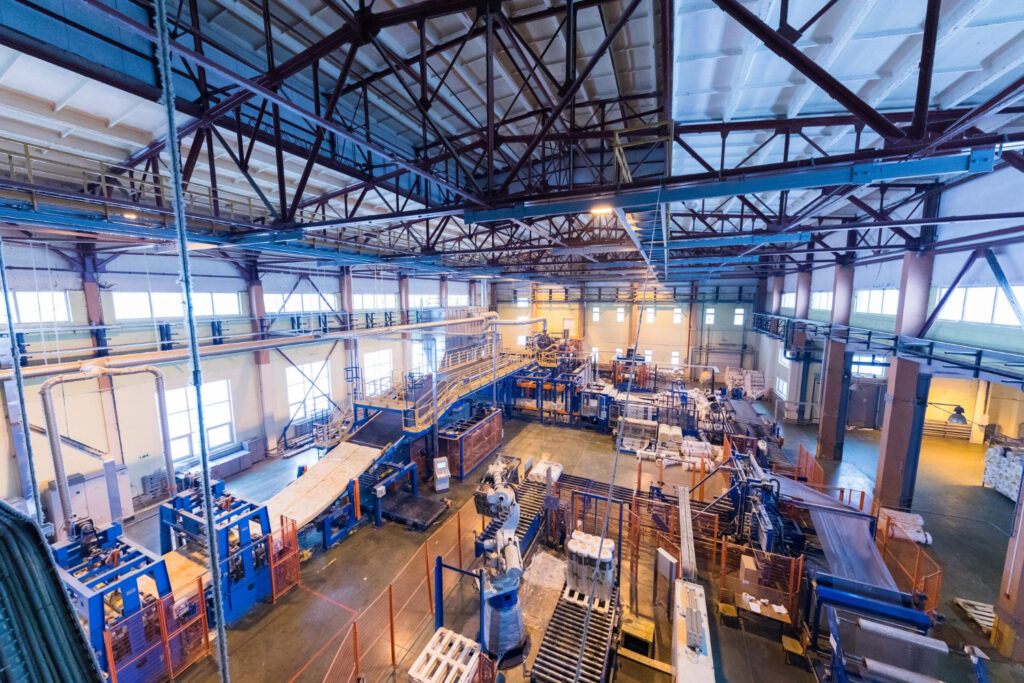
Understanding the cash flow trap in manufacturing — and how to finance your way through it
Manufacturing businesses consume cash long before they collect it. They buy raw materials, pay labor, absorb overhead, fund equipment, build inventory, ship product, and then wait to get paid. The result is a business model where growth often creates liquidity pressure faster than it creates financial comfort.
Phil Knight captured this dynamic well in Shoe Dog. One of the most revealing threads in the book is not branding or sneakers — it is cash flow.
As Nike scaled, Knight repeatedly ran into the same problem many manufacturers face today: the company was growing, but that growth required more inventory, more working capital, and more financing than the banks seemed comfortable supporting.
Knight’s frustration was simple: the business was clearly succeeding operationally, but it still felt financially starved. That is not just a Nike story.
It is a manufacturing story.
Manufacturing growth eats cash before it produces it
The core problem is timing.
A manufacturer usually spends cash in this order:
- buys materials or components,
- pays labor and overhead to convert them,
- invests in machinery and tooling to create capacity,
- carries finished goods and work-in-process,
- ships product,
- invoices the customer,
- and only later collects the cash.
That means the company is constantly financing the gap between production and payment.
The faster the company grows, the more painful that gap often becomes.
A new customer or large order sounds like a win — and it usually is — but it also means more inventory purchases, more production costs, and often more receivables. In other words, growth creates a working capital air pocket.
That is why many manufacturing owners say some version of the same thing:
“We’re having our best year ever, but cash still feels tight.”
They are not misreading the business. They are experiencing the operating math of the industry.
EBITDA is not cash
This is where many businesses get themselves into trouble.
A manufacturing concern can look healthy on paper while quietly consuming enormous amounts of cash underneath the surface. That is because earnings and liquidity are not the same thing.
A company may report strong EBITDA while still getting squeezed by:
- rising inventory balances,
- slower collections,
- customer payment terms,
- machine purchases,
- production bottlenecks,
- and the carrying cost of receivables.
Said differently, a manufacturer can be profitable while still acting as a lender to its customers and a financier of its own growth.
That is why sophisticated buyers, lenders, and investors rarely stop at the income statement. They want to understand the company’s cash conversion cycle and how much working capital is required to support one additional dollar of revenue.
That is the real underwriting question.
Why success can become dangerous
One of the most dangerous phases in a manufacturing company is not decline — it is acceleration.
A business lands a major account. Orders ramp. The owner hires. The plant gets busier. Revenue climbs.
And then cash gets tight.
Why? Because the company now has to fund the growth before the customer pays for it.
This is where good businesses often make bad financing decisions. They try to support permanent growth with temporary cash, or they use the wrong capital source for the wrong need. That is usually when liquidity problems start to feel “surprising,” even though the business is behaving exactly as manufacturing businesses typically do.
The solution is not to avoid financing.
The solution is to finance growth intelligently.
How growing manufacturers should actually finance themselves
A well-run manufacturing business typically uses multiple forms of capital, each matched to the type of pressure it is solving.
Vendor financing / trade credit:
One of the cheapest and most underappreciated forms of financing is simply negotiating better supplier terms.
Trade credit allows the company to receive goods now and pay later — often on net 30, 60, or 90-day terms. In practical terms, that means suppliers help finance the production cycle. Used properly, trade credit can materially improve cash flow and reduce dependence on outside borrowing.
The best operators do not just accept whatever terms are offered. They actively negotiate:
- longer payment windows,
- staged deposits,
- stocking arrangements,
- consignment programs,
- and early-pay discounts when liquidity is strong.
That is not just purchasing discipline. It is cash flow strategy.
Supply chain finance / SPA structures:
As businesses scale, some move into more formal supplier payment arrangements or supply chain finance programs. These structures can allow suppliers to get paid earlier — sometimes through a bank, fund, or financing platform — while the manufacturer preserves its negotiated payment terms.
Properly structured, this can strengthen supplier relationships while easing working capital pressure. Dynamic discounting and related supply chain finance tools are increasingly used to inject liquidity into the supply base without forcing the buyer to shorten its own cash cycle.
This tends to matter most when:
- growth is outpacing cash generation,
- inventory commitments are rising,
- or the supplier base is too important to destabilize.
Revolving bank lines of credit:
A revolving line of credit remains the most common tool for funding the mismatch between inventory and receivables on one side and cash collections on the other.
In a healthy structure, the line flexes with the business. It is there to fund the operating cycle — not to permanently rescue poor cash discipline.
For manufacturers, this is often the difference between manageable growth and constant stress. But it only works well if the company has:
- reliable financial reporting,
- clean receivables,
- rational inventory management,
- and a lender who actually understands industrial businesses.
Phil Knight’s complaint in Shoe Dog still resonates because many operators have lived some version of it: the business is growing, but the bank remains uneasy because growth itself creates borrowing pressure. That tension is real — and it never goes away entirely.
Asset-based lending (ABL):
For businesses with meaningful receivables and inventory, asset-based lending can be a better fit than a conventional commercial line.
ABL lenders tend to be more comfortable lending against the actual mechanics of a manufacturing balance sheet. That can be especially useful for companies that are growing quickly, seasonal, acquisitive, or simply too “working-capital heavy” for a conservative bank structure.
It is not always the cheapest option, but it is often the most realistic.
Equipment financing:
One of the most common mistakes in manufacturing is using operating cash to buy long-lived equipment.
That is a bad mismatch.
If a machine is going to produce for seven or ten years, it should generally be financed with equipment debt, leases, or term financing — not with the same cash needed to buy next month’s inventory.
A growing manufacturer usually has two simultaneous capital needs:
- working capital, and
- capacity expansion
If both are funded from the same cash bucket, the company eventually suffocates itself.
SBA-backed working capital solutions:
For smaller or lower middle market manufacturers, SBA-supported line structures can sometimes fill the gap between “too big to wing it” and “not yet institutional enough for ideal bank financing.”
The SBA’s CAPLines program is specifically designed to support short-term and cyclical working capital needs, including financing tied to receivables and inventory. More recently, SBA programs have also emphasized working capital support for manufacturers through revolving and asset-based structures.
For the right company, that can be a meaningful bridge.
Final thought
The real mistake is not borrowing.
The real mistake is using the wrong kind of capital for the wrong problem.
A well-financed manufacturer should not be trying to fund inventory, receivables, machinery, and growth all out of operating cash. That is how good companies end up feeling fragile.
The best operators understand that manufacturing is not just a margin business. It is a working capital business.
And the companies that scale best are usually not the ones with the highest sales growth. They are the ones that understand — earlier than their competitors — that growth is only valuable if the business can survive the cash demands required to support it.
Because in manufacturing, the question is not whether growth will put pressure on cash flow.
It will.
The real question is whether management has financed that growth before the pressure becomes the story.